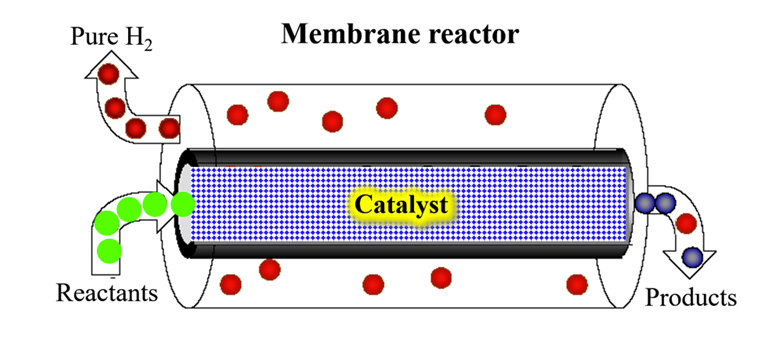
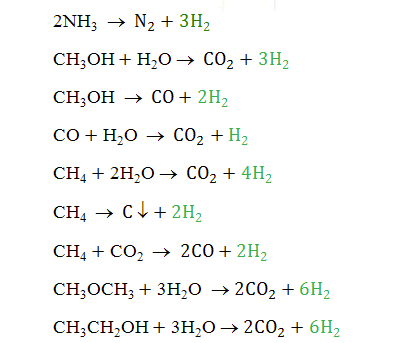
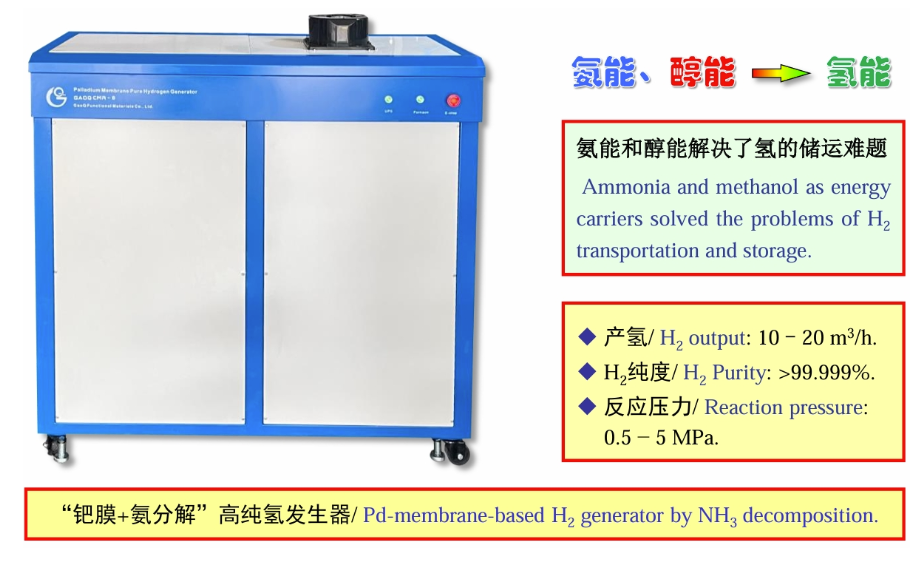
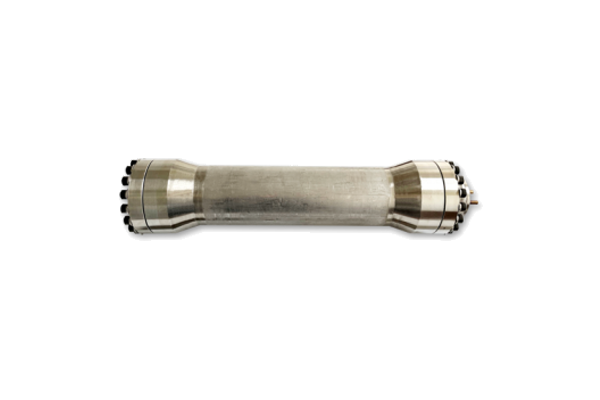
Hydrogen production—coupling with membrane separation. It not only simplifies the process "1 1<2", but also suppresses reverse reactions and side reactions, improving the conversion rate "1 1>C", commonly used in ammonia decomposition, steam reforming (methanol, ethanol, methane, dimethyl ether), water-gas shift, methanol cracking, methane cracking (co-producing carbon nanotubes), etc. The independently developed palladium alloy composite membrane withstands high temperature and high pressure, allowing the catalyst to be either filled into the palladium membrane module or the palladium membrane to be installed in the catalytic hydrogen production reactor. °2". Reaction temperature 350–600